
BIGG has commenced the first year of its MLA‑funded Producer Demonstration Site project Improved Ewe Health Outcomes from Containment which aims to refine best‑practice containment feeding and reduce ewe losses during and after confinement.
The project is investigating several key challenges, including:
- Nutritional deficiencies, as a result of long-term supplementary feeding.
- Understanding the correct way to feed to enhance rumen health, fibre vs grain rations.
- Avoiding ewe mortality (once ewes are let out of containment) over lambing.
Blood testing was conducted across three demonstration sites on twin‑bearing ewes as they entered containment pens. The below graphs show the mineral status across the three farms on entry to containment pens. Each of the marks represents the blood calcium or magnesium status of twin bearing ewes. The black lines show the optimum range of Calcium and Magnesium we are aiming for.
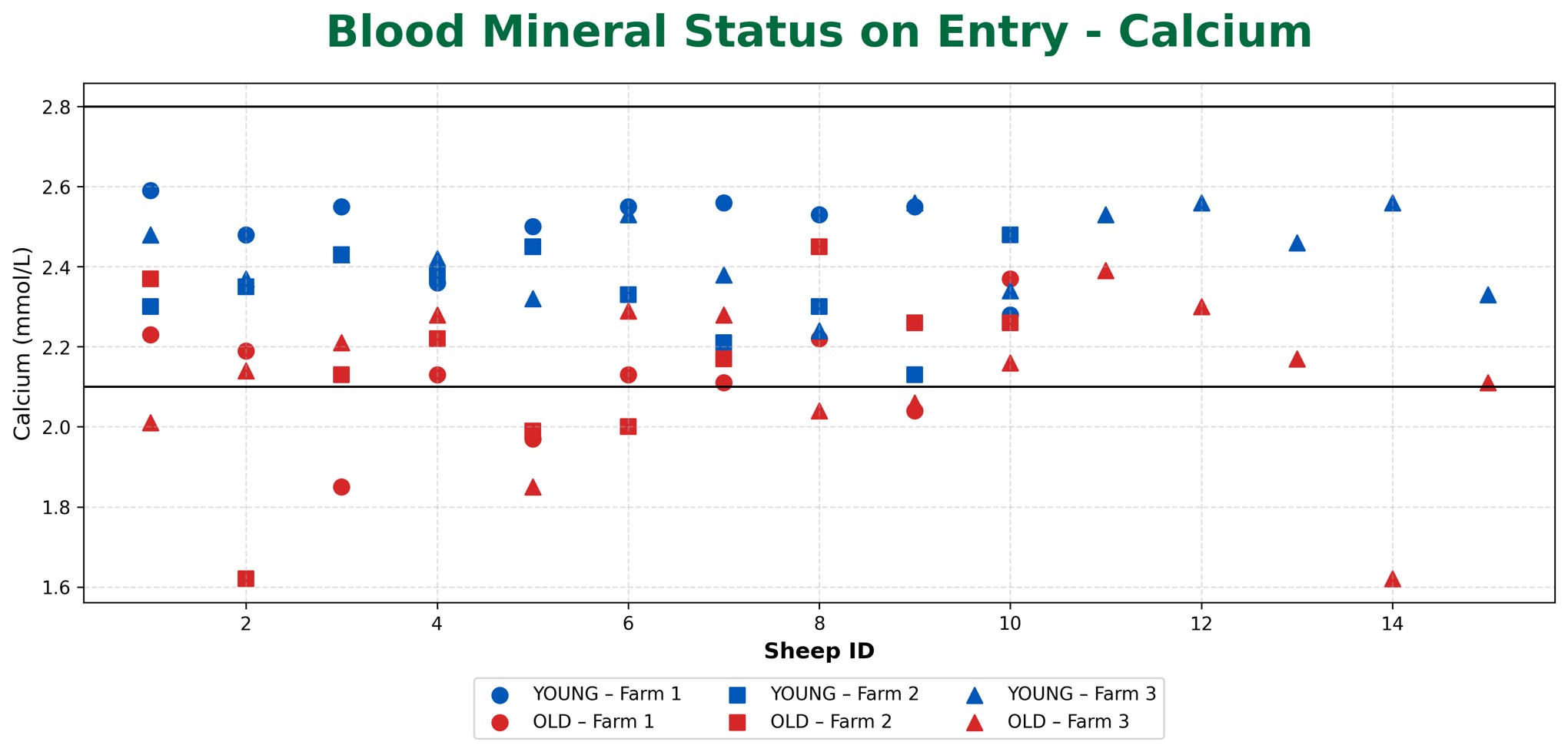
Blood calcium levels were largely within the recommended reference range across all three farms. Younger sheep generally recorded higher calcium concentrations, while a small number of older ewes fell below the desired threshold. These older animals may have depleted calcium reserves over previous breeding seasons, placing them at greater risk of subclinical deficiency.
For further information on calcium deficiency and how to prevent it, please download the Preventing Calcium Deficiency in Late Pregnant Ewes Technical Note.
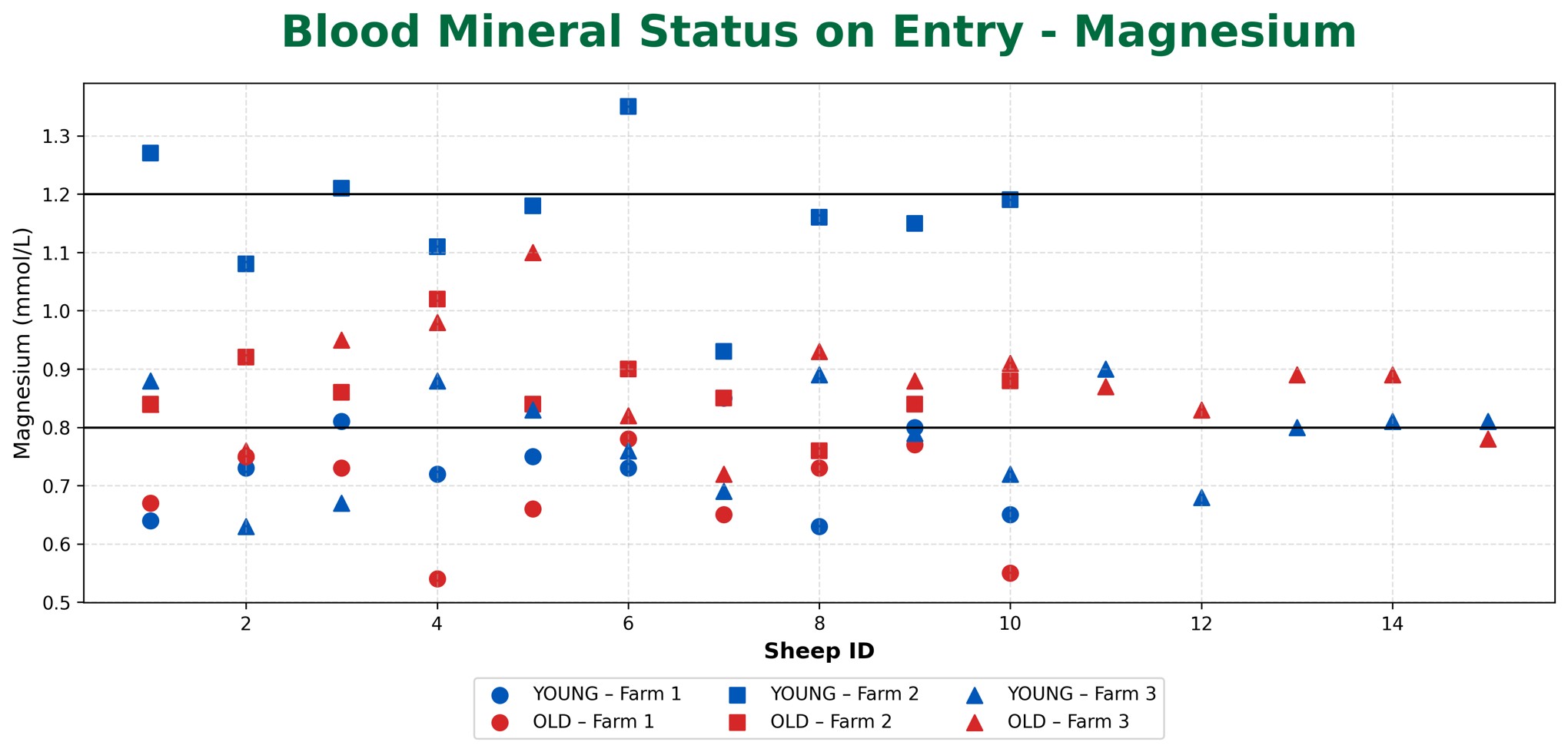
Magnesium results on entry were generally within the recommended reference range across the three farms. However, there was a proportion of young and old ewes which were below the required magnesium level on entry to containment indicating they were at risk of hypomagnesemia.
The initial blood testing results highlight the risk of lower than required mineral levels even on entry to containment. While most ewes entered containment within the desired calcium and magnesium ranges, a proportion of animals were identified below optimum levels, demonstrating the potential risk of subclinical mineral deficiencies in containment systems. These findings reinforce the need for well-balanced rations and targeted mineral supplementation to support ewe health and reduce metabolic issues through lambing.
Follow up blood testing as ewes exit containment, together with lambing and survival data, will help determine how mineral status and feeding strategies influence ewe performance and overall lambing outcomes across the three demonstration sites that are regularly using containment.